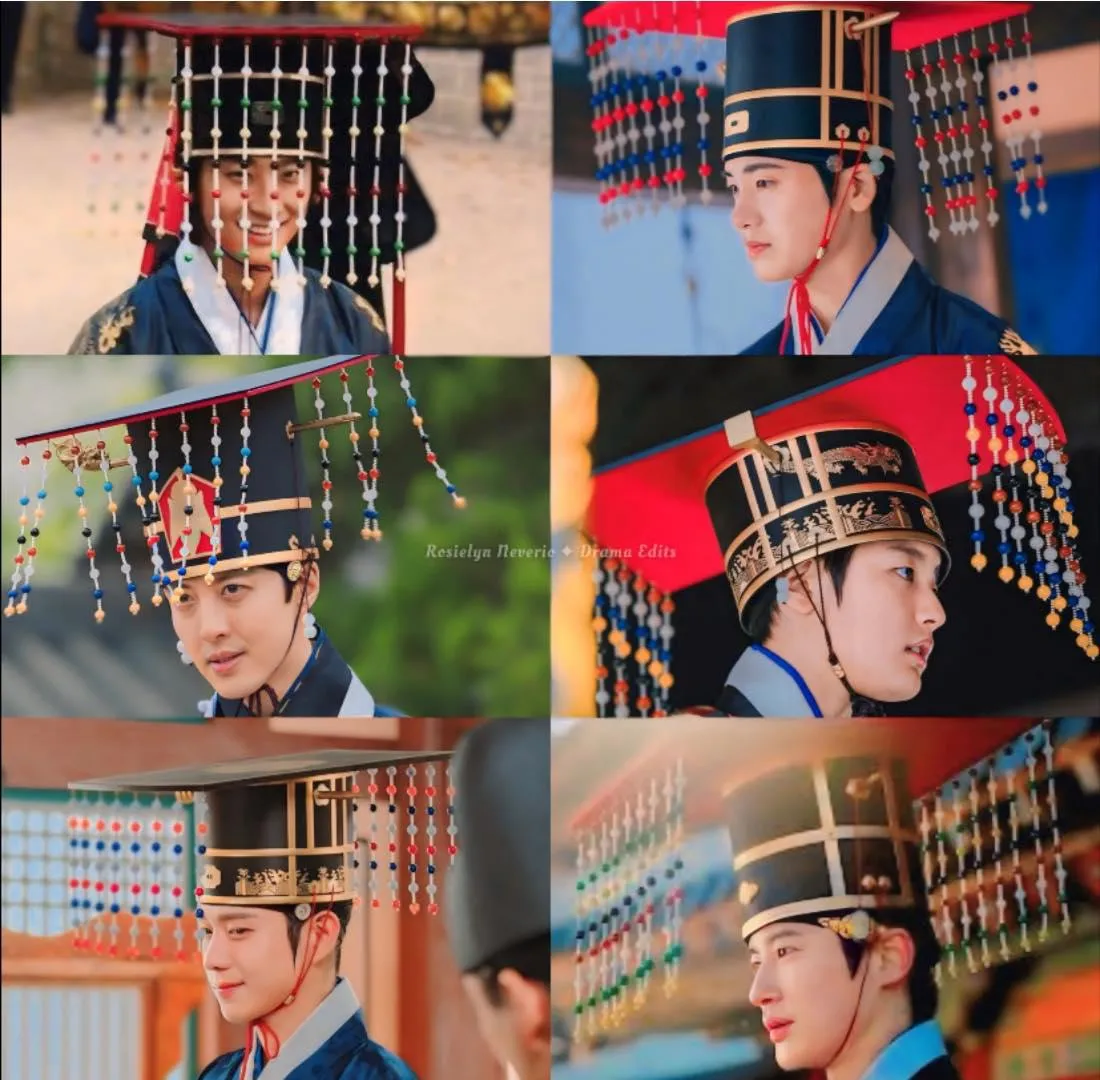
** The highly anticipated K-drama “Perfect Crown” has recently found itself at the heart of a passionate debate, igniting fervent discussions among international K-drama enthusiasts and sparking significant criticism from Korean netizens (Knetz). What initially appears to some as a minor detail has, in fact, unveiled a crucial conversation about historical sensitivity, production accountability, and the evolving dynamics of global fandom.
At the core of the Knetz reaction isn’t a frivolous complaint, but a deep-seated concern rooted in Korea’s complex colonial history and cultural identity. As many discerning fans have pointed out, the historical inaccuracies surrounding certain elements in “Perfect Crown” are not arbitrary mistakes. They are perceived as a lack of respect for centuries of tradition and, more critically, as a distortion that reopens historical wounds. When dramas, even fictional ones, reference real traditions and historical contexts, the expectation for meticulous research and execution becomes paramount. To dismiss these concerns as “overreacting” is to fundamentally misunderstand the profound historical and cultural weight they carry for the Korean people.
This nuanced perspective highlights a significant gap in understanding, particularly among some international fans (Ifans). While K-dramas’ global surge via streaming platforms like Netflix has fostered immense appreciation, it has also, at times, led to a disconnect. There’s a growing sentiment that some Ifans, perhaps due to blind investment in the genre or their favorite idols, overlook the critical historical and cultural context, reducing K-dramas to mere entertainment consumption. Messaging actors like IU or BWS with “Oppa/Unnie it’s ok” or chastising Knetz without proper research, ironically mirrors the “Western entitlement” some call out when their own historical grievances are dismissed. Understanding that you are not always the primary audience, and making an effort to grasp the underlying cultural significance, is essential for truly respectful engagement.
The brunt of Knetz’s criticism, however, is being misdirected. As many agree, the blame for such historical oversight rests firmly with the production team. This includes the director, the writers, and crucially, the lack of a competent historical advisor. It’s not the actors’ responsibility to fact-check every historical detail of their costumes or props. This production misstep echoes past controversies, such as with “Mr. Queen,” where initial widespread love turned to severe criticism over historical distortions, significantly impacting actors like Shin Hye Sun. The outrage, therefore, needs to be channeled towards those truly responsible for the drama’s execution and research protocols.
The question then becomes: where was the historical guidance? Was the “research” merely a superficial glance at previous sageuk dramas, or was a dedicated expert consulted? If such an advisor existed, why were these significant details overlooked, and why are they not being held accountable? There’s a legitimate concern that a growing reliance on superficial research, or even the potential misuse of AI-driven “research,” could lead to more such regrettable instances of historical sloppiness in the future.
Ultimately, the “Perfect Crown” controversy serves as a vital call to action for the entire K-drama ecosystem. For production teams, it’s a reminder of the non-negotiable importance of rigorous historical accuracy. For international fans, it’s an invitation to deepen their engagement beyond surface-level consumption—to learn, empathize, and direct their voices constructively, ensuring that the rich cultural tapestry of Korea is honored, not distorted.
**
What Netizens Are Saying
- “thank you for your explanation ^^”
- “This nuanced read has been missing from the discourse so ty, OP. These aren’t silly, arbitrary details Korean fans are upset about; it plays into a larger picture of colonial history. It should’ve been properly researched and executed by the production team… which is also why the hate the actors are getting is unjustified as this lack of attention to detail does not fall on them. Not sure why some international fans are having a hard time recognizing multiple statements to be true at once. I think this is in part bc of how blindly invested some international fans get in kdramas as merely a form of media consumption / way of supporting their idols. No doubt kdramas becoming so mainstream and accessible to Western viewers via streaming contributed to this. To see fans just mindlessly spamming BWS and IU’s ig saying “Oppa/Unnie it’s ok” or the posts on here berating knetz for being upset without actually reading up on the historical background (or worse, simply dismissing it)… like no matter how much some of yall love your kdramas or faves doesn’t mean you are the primary audience here. There’s cultural and historical context at play. And disparaging that reeks of Western entitlement”
- “Some “Western” fans treat the historical context and centuries of discrimination and oppression faced by Black people as something everyone should naturally understand, yet when consuming content from other countries, they make no effort to understand the historical context themselves and instead expect someone to spoon-feed it to them.”
- “Finally, someone with similar thoughts to mine. I don’t condone the hate but I get the criticism. The production/director and team behind the script should’ve put in more effort into the details and facts. Bc fictional or not— they do refer to real traditions and historical context, so they should’ve been extra careful to not distort anything. There’s a reason why Mr. Queen received so much love and then received so much criticism/hate at the end bc everything was perfect until the started distorting history. And the hate Shin Hye Sun was receiving was just as bad as IU. At least IU has her singing career to fall back on, Hye Sun’s acting career kind of hit a slump for a little while. Again, I don’t condone the hate but it would be good if Ifans stop dismissing why the historical distortion and inaccuracies are so offensive to Korean ppl. You can criticize the excessive hate but to dismiss it as “it’s just fictional” is not the right way of thinking either. And I think that’s the common thread I see with ifans (not all of them but many of them) who consume Korean media— and that’s they don’t care enough to bother with the history and cultural significance of Korea beyond Kdramas and Kpop. So when things like this happen, they dismiss and just label knetz as overreacting.”
- “I think most people understand what the problem with the crown is, and why it’s significant. I just wonder why the outrage isn’t going in the right direction. Who WAS in charge of these details on the drama? Surely they had someone in charge of the historically-inspired details? If the “research” just consisted of costume designers and prop managers watching a bunch of coronation scenes in older sageuk dramas, and trusting the accuracy of those without taking into account the different historical context, then it’s a deeper problem with the production. You need to hire an historical advisor who knows more about these things than your average props guy. You’d think this was standard procedure in Kdramas when Koreans are so strict about dramas being historically accurate. (And if there was an historical advisor like this in the crew, why aren’t they held responsible?) You can’t expect the actors of all people to know these details. A director probably wouldn’t notice them either without an expert’s advice, but a director is definitely more responsible for the entire production than the actors are. To a non-Korean, it just seems wild that the majority of the blame is falling on the actors, when they are actually the least responsible for the problem. And I hope this isn’t a controversial thing to say, but Koreans at large seem so enthusiastic and accepting of AI these days that I’m afraid this sort of sloppiness is going to happen more and more in the future. AI “research” is already ruining a lot of things in many fields.”